Korean Bibimbap
Highlighted under: Inspired Inspiration
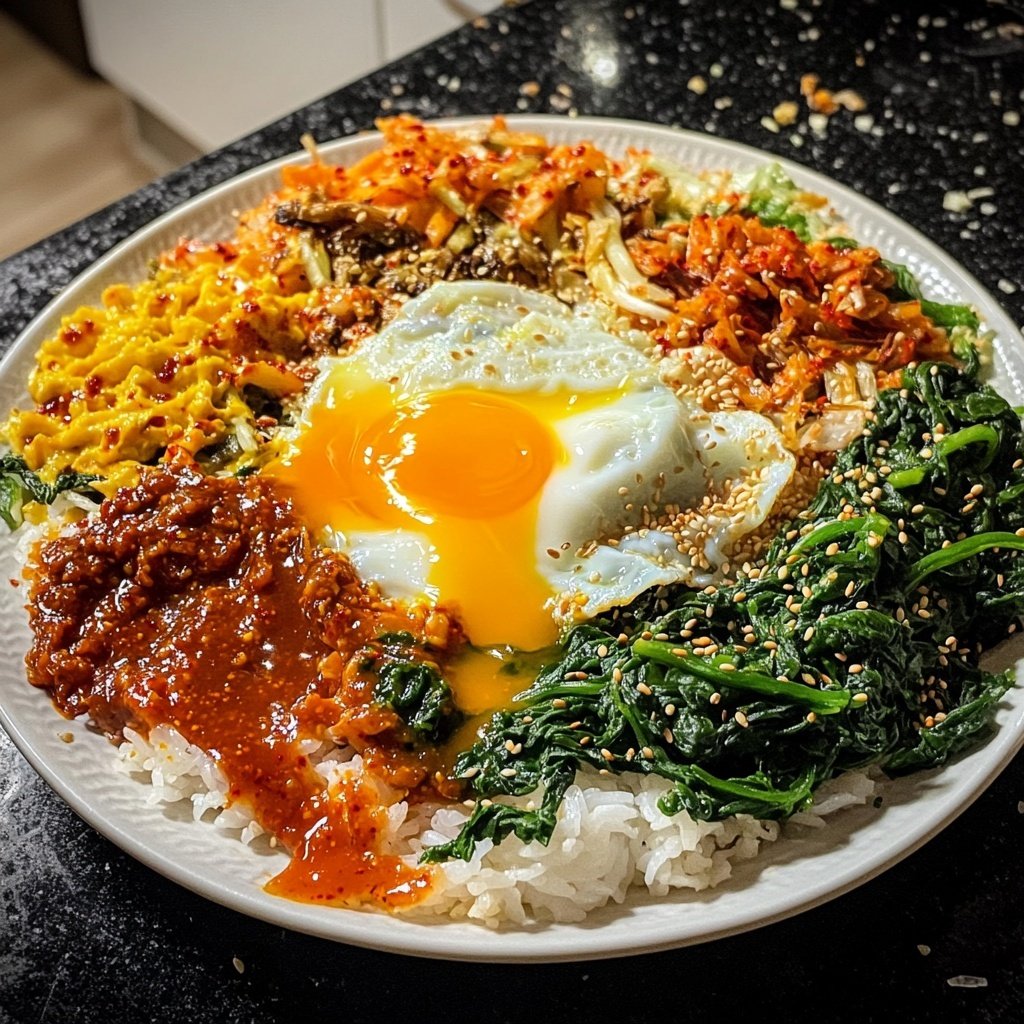
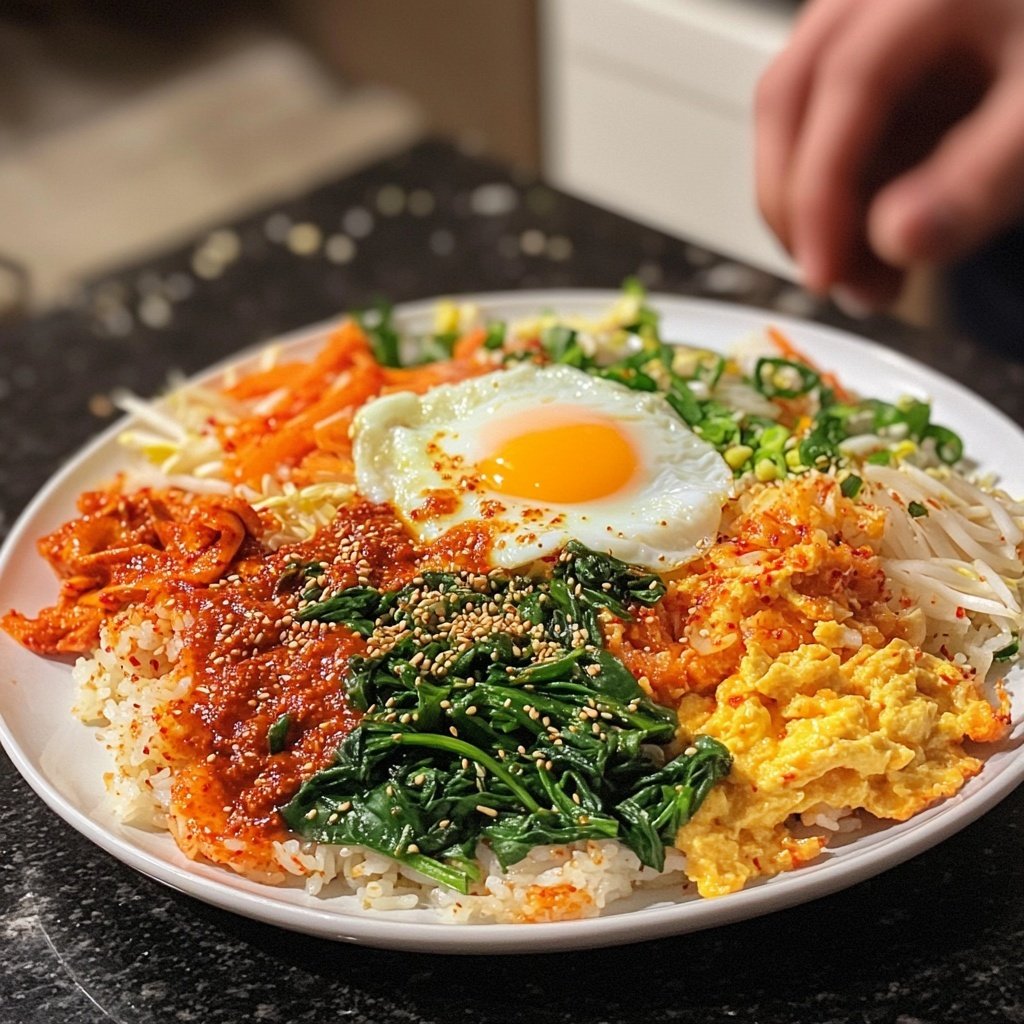
Korean Bibimbap is a vibrant and flavorful rice bowl topped with an assortment of vegetables, meat, and a fried egg, all mixed together with spicy gochujang sauce.
Korean Bibimbap is not just a meal; it's a colorful representation of Korean culture. Each ingredient represents harmony and balance, making it a truly delightful dish.
Why You'll Love This Recipe
- A beautiful medley of colors and textures
- Customizable with your favorite vegetables and proteins
- Deliciously spicy with the right amount of heat
What Makes Bibimbap Special
Bibimbap, which translates to 'mixed rice,' is a traditional Korean dish that is as beautiful as it is delicious. The vibrant colors of the assorted vegetables create an eye-catching presentation, making it a feast for both the eyes and the palate. Each ingredient plays a crucial role, from the earthy flavors of the mushrooms to the crispness of the julienned carrot and zucchini. Together, they create a harmonious balance that is satisfying and wholesome.
The versatility of bibimbap is one of its standout features. You can easily customize the dish to suit your preferences, using a variety of vegetables and proteins. Whether you choose beef, tofu, or even seafood, the possibilities are endless. This makes it not only a great option for families with different tastes but also a fun dish to prepare for gatherings or meal prep.
The Importance of Gochujang
Gochujang is a key ingredient in bibimbap, providing a unique depth of flavor and a hint of spiciness that elevates the dish. This fermented chili paste is rich in umami, adding complexity that complements the freshness of the vegetables and the savory notes of the meat. The heat level can be adjusted according to your preference, making it suitable for both spice aficionados and those who prefer milder flavors.
In addition to its flavor, gochujang also offers health benefits. It is known to boost metabolism and contains antioxidants, making it a flavorful yet nutritious addition to your meals. When paired with the other ingredients in bibimbap, it creates a balanced dish that not only satisfies your cravings but also supports your well-being.
Serving Suggestions
Bibimbap is typically served in a bowl, but you can also present it on a large platter for a communal dining experience. This encourages sharing and allows everyone to customize their own portions. Consider serving it alongside Korean side dishes, known as banchan, such as kimchi or pickled radishes, to enhance the meal with additional flavors and textures.
To elevate your bibimbap experience, consider topping it with additional garnishes like sliced avocado, a sprinkle of green onions, or a drizzle of chili oil. These elements can add new dimensions to the dish and make it even more satisfying. Whether enjoyed as a quick lunch or a hearty dinner, bibimbap is sure to impress.
Ingredients
For the Bibimbap
- 2 cups cooked white rice
- 1 cup spinach, blanched
- 1 cup bean sprouts, blanched
- 1 carrot, julienned
- 1 zucchini, julienned
- 4 shiitake mushrooms, sliced
- 4 eggs
- 1 cup sliced beef (or tofu for a vegetarian option)
- Gochujang (Korean chili paste)
- Sesame oil
- Soy sauce
- Sesame seeds for garnish
Feel free to customize the toppings based on your preferences!
Instructions
Prepare the Ingredients
Cook the rice according to package instructions and set aside. Blanch the spinach and bean sprouts in boiling water for 1-2 minutes, then drain and set aside.
Cook the Meat and Vegetables
In a pan, heat a tablespoon of sesame oil and sauté the sliced beef until cooked through. Remove from heat and set aside. In the same pan, stir-fry the carrots, zucchini, and mushrooms until tender.
Fry the Eggs
In a separate pan, fry the eggs sunny-side up until the whites are set but the yolks are still runny.
Assemble the Bibimbap
In a bowl, place a serving of rice and arrange the vegetables, beef, and fried egg on top. Drizzle with gochujang, sesame oil, and sprinkle with sesame seeds.
Mix and Enjoy
Before eating, mix everything together thoroughly to combine the flavors and enjoy your delicious bibimbap!
Serve immediately and enjoy the vibrant flavors!
Pro Tips
For extra flavor, marinate the beef in soy sauce, garlic, and sesame oil before cooking.
Tips for Perfect Bibimbap
To achieve the perfect bibimbap, it's essential to use fresh, high-quality ingredients. Choose vibrant vegetables at their peak for optimal flavor and nutrition. Additionally, cooking the vegetables separately allows you to control their textures and ensures that each ingredient shines in its own right. Avoid overcrowding the pan when sautéing to achieve that desired crispiness.
If you're short on time, you can prepare the vegetables and protein in advance. Store them in airtight containers in the refrigerator, so you can quickly assemble your bibimbap whenever cravings strike. This makes it a convenient option for busy weeknights or meal prep enthusiasts.
Storing Leftovers
If you have leftover bibimbap, it's easy to store and reheat. Keep the components separate to maintain the freshness of the vegetables. Store the rice, meat, and vegetables in airtight containers in the fridge. When you're ready to enjoy the leftovers, simply reheat the rice and protein in the microwave, and assemble with the fresh vegetables.
For an added twist, consider transforming leftover bibimbap into a stir-fry. Just toss everything together in a pan with a bit of sesame oil and soy sauce for a quick and delicious meal. This way, you can enjoy the flavors of bibimbap in a new and exciting way.
Questions About Recipes
→ Can I make bibimbap vegetarian?
Absolutely! Simply replace the beef with tofu or additional vegetables.
→ What can I use instead of gochujang?
You can use a mix of chili paste and a bit of sugar as a substitute, but the flavor will differ.
→ Can I prepare bibimbap in advance?
Yes, you can prepare the vegetables and protein ahead of time, but it's best to assemble and serve it fresh.
→ What other toppings can I add?
You can add kimchi, radish, or any seasonal vegetables you like.
Korean Bibimbap
Created by: Nell Abernathy
Recipe Type: Inspired Inspiration
Skill Level: Intermediate
Final Quantity: 4 servings
What You'll Need
For the Bibimbap
- 2 cups cooked white rice
- 1 cup spinach, blanched
- 1 cup bean sprouts, blanched
- 1 carrot, julienned
- 1 zucchini, julienned
- 4 shiitake mushrooms, sliced
- 4 eggs
- 1 cup sliced beef (or tofu for a vegetarian option)
- Gochujang (Korean chili paste)
- Sesame oil
- Soy sauce
- Sesame seeds for garnish
How-To Steps
Cook the rice according to package instructions and set aside. Blanch the spinach and bean sprouts in boiling water for 1-2 minutes, then drain and set aside.
In a pan, heat a tablespoon of sesame oil and sauté the sliced beef until cooked through. Remove from heat and set aside. In the same pan, stir-fry the carrots, zucchini, and mushrooms until tender.
In a separate pan, fry the eggs sunny-side up until the whites are set but the yolks are still runny.
In a bowl, place a serving of rice and arrange the vegetables, beef, and fried egg on top. Drizzle with gochujang, sesame oil, and sprinkle with sesame seeds.
Before eating, mix everything together thoroughly to combine the flavors and enjoy your delicious bibimbap!
Extra Tips
For extra flavor, marinate the beef in soy sauce, garlic, and sesame oil before cooking.
Nutritional Breakdown (Per Serving)
- Calories: 500 kcal
- Total Fat: 20g
- Saturated Fat: 5g
- Cholesterol: 185mg
- Sodium: 600mg
- Total Carbohydrates: 70g
- Dietary Fiber: 5g
- Sugars: 4g
- Protein: 18g